
Past Journal Issues
Archives

We are especially thankful for the help of guest lecturer Dr. Hanna Makowski, postdoctoral researcher at Black Rock Forest, who collaborated on the phenology project. Dr. Makowski generously came to campus to teach us her techniques for measuring fall tree phenology and helped the students with analysis. Our data is presented in student work here in the journal but will also be used by Dr. Makowski in her larger research project.
-
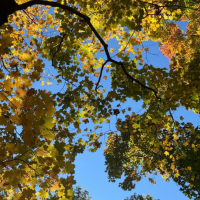
DeVito et al. 2024. Invasive maples exhibit longer fall phenology than native maples
-
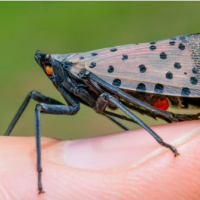
Fontanez et al. 2024. Birds show neutral preference for spotted lanternfly, Lycorma delicatula, in a mix missing their red coloration
-
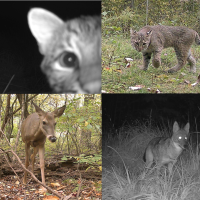
Reinhardt et al. 2024. Decreased wildlife use of disturbed area in Blind Brook Forest
-
Simon et al. 2024. Mammals prefer forest habitat over cut habitat at Blind Brook Forest Restoration Area
-
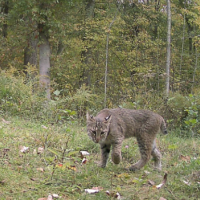
Taveira et al. 2024. Wildlife prefer use of forest habitat over deforested area at Blind Brook restoration site


-
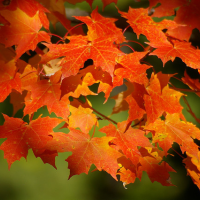
Escobar et al. 2024. Phenological shifts in maple trees: comparing leaf senescence between native and non-native species across urban and forest habitats
-
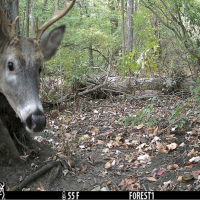
Reden et al. 2024. Effects of habitat disturbance on wildlife activity and diversity in Blind Brook Forest
-
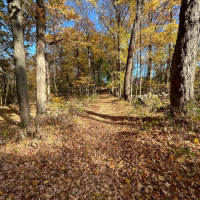
Richardson et al. 2024. Autumnal photosynthesis duration varies amongst native and invasive maples in urban and forest environments
-
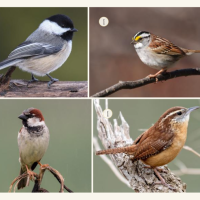
Streete et al. 2024. Birds show no taste rejection to Spotted Lanternfly
-
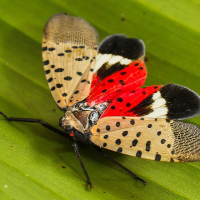
Truex et al. 2024. Birds as biocontrol: avian species exhibit no avoidance of spotted lanternflies when unable to see red coloration


The fall 2023 class of General Ecology worked in groups to develop novel research ideas related to the ecology of our campus. The groups worked together to plan, generate hypotheses, collect data, and analyze data and then each student wrote their own final project. The best final projects are included here in the Purchase College Journal of Ecology.
-
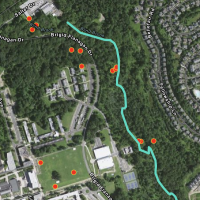
Conte et al. 2023. Geese Poop of Purchase College’s Great Lawn may lack influence on the eutrophication of Blind Brook
-
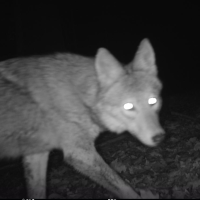
Feehan et al. 2023. Purchase College campus fragmentation on biodiversity: camera trapping 2023
-
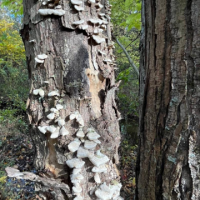
Keller et al. 2023. Eastern Blind Brook exhibits healthier riparian forest structure than western Blind Brook
-
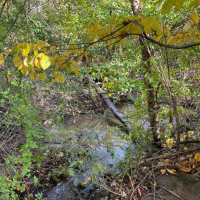
Richardson et al. 2023. Old growth riparian forest at Purchase College exhibits higher tree species richness, evenness and DBH than younger growth forest
-
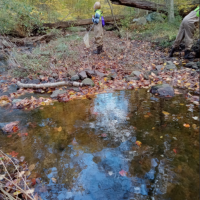
Schulte et al. 2023. Anthropogenic effects on the east and west streams of Blind Brook


-
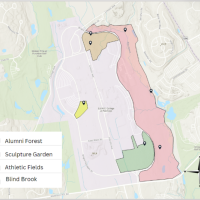
DeVito et al. 2023. Smaller fragments, smaller species: varying fragment sizes result in different community structure
-
Graygor et al. 2023. Eastern Blind Brook hosts a healthier riparian forest structure than western Blind Brook
-
Millman et al. 2023. Insect biodiversity varies across areas of differing levels of human disturbance at SUNY Purchase College
-
Rosa Martins et al. 2023. Beech leaf disease prevalent throughout Purchase College’s Blind Brook forest buffer
-
Vander Putten et al. 2023. Varying size of forest fragments contain different wildlife community compositions


The 2022 semester of Wildlife Ecology focused on better understanding the wildlife community on the Purchase College campus. Students worked together as a class to collect forest structure data and trail camera images over the course of the semester. Each student then worked independently to analyze data in a unique way.


King, A, J. Pacheco, A. Rubin . 2021. Aquatic and terrestrial invertebrates denser and more diverse in a suburban location along Blind Brook stream. Purchase College Journal of Ecology 5: 3 - 12.
Pareti, K., A. Rosenberger, E. Hata. 2021. Wildlife species abundance is affected differently by varying human disturbance. Purchase College Journal of Ecology 5: 13 - 20.
Cullen, S.C., A.A. Hassan, R. Olsen, G. Papantoniou. 2021. Urbanized invasive house sparrows benefit by having flexible diets. Purchase College Journal of Ecology 5: 21 - 30.
Lupie, J., J. O’Rourke, S. Atlassi. 2021. Invasive species possess potential benefits based on their fall phenology. Purchase College Journal of Ecology 5: 31 - 42
Editor’s note: This issue of the Purchase College Journal of Ecology was published during the COVID-19 pandemic when General Ecology was taught entirely remotely. I would like to commend the students for their hard work during this very difficult semester. Thank you for continuing to push yourselves to do innovative science and work together even when we could not be together.
Salmoiraghi, A., P. Cruz, J. Gifford, and J. Mickens. 2020. Tree species richness and circumference vary between rural, suburban, and urban environments. Purchase College Journal of Ecology 4: 2 - 10.
Bell, S., G. Gisser, Z. Mitchell, and J. Zippelli. 2020. Runoff containing disinfectants being overused during the COVID-19 pandemic may have negative impacts on plant life. Purchase College Journal of Ecology 4: 11 - 18.
Godoy, Y., M. Molina, E. Seidman, and K. Cooleen. 2020. Urban birds have shorter flight initiation distances (FIDs) than rural counterparts. Purchase College Journal of Ecology 4: 19 - 26.
Fabrizio, M., A.J. Jacobus-Oseroff, G. Mendez, K. Starkey. 2020. Pollinators prefer native plants over non-native plants. Purchase College Journal of Ecology 4: 27 - 36.
Ramirez, R.A., A. Bowman, S. Jimenez, and E. Beilin. 2020. Blue jays are more likely to spend time feeding in covered areas. Purchase College Journal of Ecology 4: 37 - 43.
Winter, V., S. Rubock, R. Lodes, and A. Brown. 2019. Invasive plants adversely affect soil chemistry and growth of native seedlings. Purchase College Journal of Ecology 3: 2 - 9.
Dicanio, Z, M. Graham, K. Robeson, and A. Creutzfeldt. 2019. Birds prefer unoccupied bird feeders compared to feeders with realistic of non-realistic threats. Purchase College Journal of Ecology 3: 10 - 18.
Cavalieri, M, J. Consalvo, T. Rushford, and A. Selino. 2019. Pesticides impair the growth of sunflower and pumpkin seeds. Purchase College Journal of Ecology 3: 19 - 26.
Kranjac, D., D. Crowley, and D. Parker. 2019. Water quality testing at varied urban runoff locations shows impacts on stream health. Purchase College Journal of Ecology 3: 27 - 36.
- Increased tolerance of human presence observed in urban compared to rural Eastern Gray Squirrels
- Bird preference of native vs. introduced food sources at Purchase College
- Using a controlled environment to test porcelain berry (Ampelopsis brevipedunculate) shade tolerance in comparison to light levels in a natural habitat
- Levels of insect, bird, and mammal activity at snag trees located in areas with variable amounts of human activity and urbanization.
- Impact of pine allelopathy on seed germination.
- Water temperature variations throughout the day are not correlated with dissolved oxygen in Blind Brook.
-
vol 1 2017 Purchase College Journal of Ecology_total.pdf
vol 1, fall 2017 journal of ecology
- Preferred soil conditions of invertebrates at SUNY Purchase
- Frequency of raccoon occurrence at two dumpster sites in SUNY Purchase College campus
- Differences in plant diversity and dimensions between edge and contiguous forest habitats
- Effect of species diversity and habitat type on dispersal of Black Tar Spot disease in Acer plantanoides
- A bug’s life: diversity and abundance of insects on Purchase College campus
- The effects of runoff on Blind Brook and its potential impact on the Long Island Sound
- Effects of urbanization on northeastern mammal species: dumpsters as a food source for nocturnal omnivores