
Making Change and Solving Problems
Meet graduates from the Economics program who’ve chosen to make a difference in fields such as philanthropy, arts management, and the law.
By Steve Neumann
Schoolchildren take their first step into the world of economics when they have a basic understanding of addition, subtraction, and coin and bill values. They can then learn how to make change.
Another sense of “making change” is the one espoused by the controversial economist and philosopher, Karl Marx. “The philosophers have only interpreted the world, in various ways,” Marx wrote. “The point is to change it.”
Schoolchildren who go on to major in economics in college learn how societies manage limited resources, with traditional curricula focused on core concepts in microeconomics and macroeconomics, public policy, and economic theories.
At Purchase, economics majors study those things too, but they also graduate with the ability to analyze and interpret a wide range of societal issues and propose solutions.
“The main goal of the economics program at Purchase is to train students in the ‘economic way of thinking,’” says Associate Professor of Economics Cédric Ceulemans, “and to use economics as a tool to understand, analyze, and solve problems in all walks of life.”

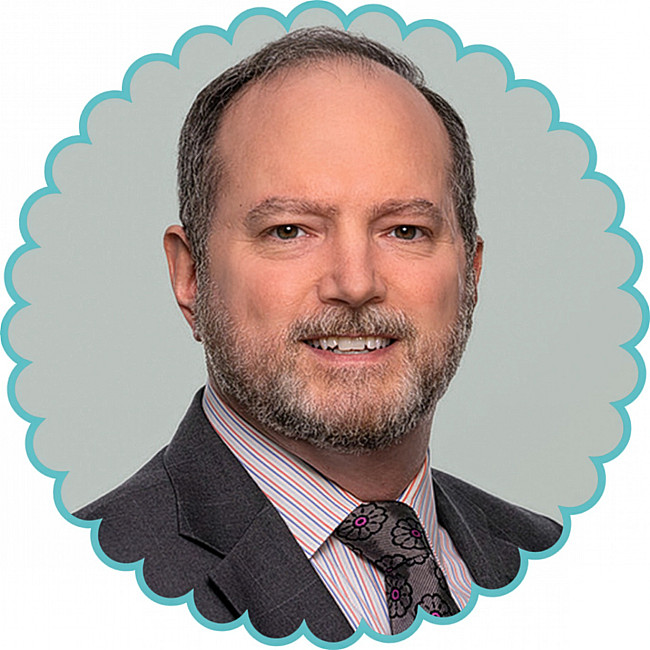
Defending Creatives
Ken McGinis ’95 is the quintessential type of student you might expect to attend SUNY Purchase. Musically inclined, open-minded, socially conscious, and coming from an artistic family, McGinis came to Purchase after deciding he didn’t want to pursue a music career.
“I started playing guitar when I was 12 years old, and eventually went to Juilliard, but I realized I didn’t have the personality for it,” McGinis says. “I still wanted to be around the arts, so when I was 20 years old, I decided to apply to Purchase.”
After a brief stint in what he calls a “Wall Street-adjacent job” and a position in the advertising department of The Nation magazine, McGinis decided to go to law school.
“I had been toying with the idea of becoming a lawyer involved with the artistic community or the entertainment world in some way,” McGinis says. “But that would have meant going to LA, and LA wasn’t really for me.”
McGinis did end up getting his law degree at Pace University, after which he worked at boutique Manhattan law firm Hill, Betts & Nash LLP.
“It was a maritime and admiralty law firm, and the work was super interesting because I got to do the performance aspect of the practice of law, which is trial work,” he says.
“One of the partners there called it ‘warfare by theater,’ and that’s what we were doing.”
At the same time, McGinis kept his connection to the arts world by providing pro bono legal advice and representation through Volunteer Lawyers for the Arts in New York. It’s an organization artists can turn to when they believe they have a legal claim to something.
“My economics education opened me up to the idea that people’s motives could be quantified and even in some ways predicted,” McGinis says, “and that was fascinating to me.”
McGinis applied this knowledge to the claim by one of his favorite pro bono clients—a songwriter living in Soho who had written music for a BBC program. The client had gotten paid for it, but felt that he had gotten stiffed when the company had released a DVD of the program without paying him.
“I asked him what he thought was a reasonable amount of compensation, and he told me $2,500,” McGinis says. “But I told him I was gonna shoot for the moon and try
to get him a lot more money than that.”
McGinis then wrote a letter to the BBC laying out the facts of the case and asking for $25,000 based on how many DVDs they sold and how much of his music was
part of it.
“I told them that because they have offices in New York, I could take them into federal court and win, because they’ve taken advantage of this person. A couple of days later I get an email from them asking if my client will
accept $10,000.”
“That’s the kind of rewarding stuff I’ve been doing,” McGinis adds, “because I know there are shark-infested waters in the business of entertainment.”

Protecting IP
Like McGinis, Angela Galli ’19—who majored in both economics and arts management—also grew up as a musician, playing piano and trombone.
And although she attended the prestigious Fiorello H. LaGuardia High School of Music & Art and Performing Arts in Manhattan, she, too, quickly discovered that a career in music wasn’t for her.
“Although I love music, I realized I wanted to be more on the business side of it,” Galli says.
Today, Galli is the Senior Manager, Content Protection & Anti-Piracy at Warner Music Group, where her focus is on AI-related copyright infringements. Before joining Warner in 2023, Galli was the Lead Agent of Copyright Administration at TuneCore, the world’s leading digital music aggregator.
“At Warner, I lead a team that monitors social media like YouTube, TikTok, and Instagram to detect and remove copyrighted content,” Galli says.
Galli uses the synergistic blend of economics and arts management she experienced at Purchase to excel in her role at Warner.
“Throughout my years at Purchase, I realized how hand-in-hand arts management and economics actually are,” Galli says. “Economics is used in everything. I work for a major record label analyzing large data sets and looking for trends, which is similar to how it is in economics.”
Galli got a taste for this type of analysis through her senior thesis, which included aspects of both her arts management and economics majors.
“My senior thesis focused mostly on the marketing strategies that Jazz at the Lincoln Center uses to get people’s attention and get them to buy tickets,” Galli says. “I pulled behavioral economics into it to explain how JLC was deciding on these tactics and what their strategy was, and the economics behind why they would do what they do.”

Funding Food Security
Rebecca Snyder ’08 credits Purchase with ultimately helping figure out her career path. Snyder is currently Director of Corporate Partnerships at Feeding Westchester, a nonprofit that serves Westchester County by providing food to a hunger-relief network of nearly 300 partners and programs.
“The trajectory of my life changed after my time at Purchase,” Snyder says. “The one course that really sticks out 20 years later was Professor Peter Bell’s wealth and poverty course, which was heavy with critical thinking.”
It was that course that led to an opportunity for Snyder to further her intellectual and moral horizons through a fellowship to study abroad.
“I was the recipient of the ASIANetwork Freeman Fellowship grant to study in Thailand in the summer of 2007,” Snyder says. “I studied the impact of the media on the modernization of Thai women economically, socially, and politically.
“I was interested in understanding if, as the country became more globalized, women were given more opportunities,” Snyder adds. “The short answer—societally, economically, politically—was no.”
Immediately after graduating from Purchase, Snyder continued to explore broader international economic and societal issues by earning a master’s degree in International Relations and Affairs at The New School with a dual concentration in development and governance and rights.
“I ended up in Hong Kong working at a social service agency that supported asylum seekers and refugees,” Snyder says. “It was there that one of my supervisors asked if I ever considered a career in fundraising because he thought I was a fearless and passionate person.”
That was in 2012, and Snyder has been working to make change through the nonprofit world ever since.
“It was studying at Purchase that ultimately led to my career in philanthropy,” Snyder says, “because there was a lot of critical thinking, and boxes that were opened, and different ways to look at things, which I think is the Purchase way.
“I fly out of bed in the morning, excited to work at Feeding Westchester,” Snyder adds. “It is a dream job for me, personally, because food insecurity is one of the most critical issues facing the world.”

And Justice For All
Ndukwe Agwu ’03 attacks critical justice issues—like bankruptcy and foreclosure for low-income individuals and families—from a different angle, that of the legal profession.
As Chief Legal Officer and General Counsel at Brooklyn Legal Services Corporation A, Agwu, who majored in both economics and political science, works to advance social and economic justice through innovative, neighborhood-based legal representation and advocacy throughout New York City.
“I always knew I wanted to be a lawyer,” Agwu says. “I initially wanted to be a prosecutor, because I equated law with what I saw on TV growing up. But when I interned at the district attorney’s office, I realized that it wasn’t for me.”
After Purchase, Agwu went on to get his law degree at Touro Law School, but he recognizes that his Purchase education gave him the foundational tools to succeed in law school and beyond.
“The projects I did throughout the years at Purchase were heavy on research and understanding, not just memorization,” Agwu says. “And that was kind of what law school was—you had to do a lot of writing, a lot of reading, and a lot of due diligence to make sure you understood what you were doing.”
Agwu particularly enjoyed those economic classes that talked about the fiscal and monetary structures of governments that are tied to legal structures and issues—like the IMF and World Bank, which was the topic of Agwu’s senior thesis at Purchase.
“My thesis was called ‘The IMF Dilemma,’ and it was influenced by both the political science and economic side,” Agwu says. “I discussed how the IMF goes into struggling countries looking to help by loaning them money, but demands that they change their economic structure to Western capitalism.
“I think Purchase is primarily known for the arts,” Agwu says. “But I got an excellent education on the social science and humanities side.”
While economics is primarily considered a social science—the goal of which is to understand and explain human behavior, relationships, and institutions—it can also be said to draw on philosophy for its values and goals, and on art for its application and practice. The unique strength and utility of the Purchase economics program seems to lie in blending all three to understand and improve the human condition. These four alumni are just some of the many graduates of the program who strive to make sense of the complexities of human life and contribute to a more just and informed society.